
"defect rate"
2000 article(s) found

"Flick (Roasting Defect)" phenomenon in Coffee roasting
Following Cafe Review (official Wechat account vdailycom) found that Flick (Roasting Defect) phenomenon in coffee roasting Flick (Roasting Defect) (flicker) red curve and blue curve have the same bean temperature as the blue curve. * the Development Time Ratio of the red curve is 25.6% * the development rate of the blue curve (D

Kenya Coffee Kenya rating
Usually, Kenyan coffee is classified as follows: 1) Common categories: coffee fruits picked by hand, picked by hand, picked out immature fruit (unripe), overripe fruit (overripe) and other defects, peeled, after about 36 hours of fermentation, placed on a metal grid for sun drying, in the processing plant to remove the seed shell (parchment) to become a blue-green appearance

The science of coffee cup testing: are over-fermented raw beans considered "defective beans"?
Professional coffee knowledge exchange more coffee bean information Please pay attention to the coffee workshop (Wechat official account cafe_style) beans have standards, zero defect without bad taste raw beans, no matter in the planting, harvest, processing, transportation, storage and all the process, there may be aroma defects, we call these defective beans or bad beans. In particular, the processing of coffee cherries is complicated due to the need to go through it.

Classification and classification of coffee beans | meaning of the name of coffee
For more information on coffee beans, please follow the coffee workshop (Wechat official account cafe_style)-- how coffee is named-- G1, G2, G3, G4, AA, PB, SHB, SHG, EP, PLANTATION. Have you ever wondered what the difference is? Are you curious about what they are referring to? Today we are going to start talking about what we usually buy

Indonesian coffee grade-
Professional coffee knowledge exchange more coffee bean information please follow the coffee workshop (Wechat official account cafe_style) Republic of Indonesia (Indonesian: Republik Indonesia, English: Republic of Indonesia), referred to as Indonesia (Indonesia). It is a Southeast Asian country with Jakarta as its capital. With countries such as Papua New Guinea, East Timor and Malaysia
Ethiopian Coffee Bean Story-relationship between Ethiopian Coffee Bean grading and defect rate
Professional coffee knowledge exchange more coffee bean information please follow the coffee workshop (Wechat official account cafe_style) in all the coffee producing areas, the most familiar is Ethiopia, because this is the recognized birthplace of coffee. At first, coffee fruit was regarded as a fruit rather than a drink. Ethiopian coffee beans taste very diverse, from oranges and flowers

A brief introduction to the flavor description of Yejia Coffee Cochel G2 coffee and G1 coffee
A brief introduction to the taste of Yega Coffee Cochel G2 Coffee and G1 before the harvest season, Trabocca invites selected smallholder organizations / producers to participate in the production of micro-batches of coffee (about 1500 to 3000 kg). Carefully hand-picked 100% ripe red coffee cherries (hence the Red Cherry Project). Trabocca provides financial loan support and new hardware equipment.
Global Coffee Bean grading system details of Raw Bean grading Standards in Coffee producing countries
For the exchange of professional baristas, please pay attention to the naming methods of coffee in coffee workshop (Wechat official account cafe_style): G1, G2, G3, G4, AA, PB, SHB, SHG, EP, PLANTATION. What exactly does it stand for? The information that may be included in the name of a coffee is: country, producing area, variety, treatment, cup quality, bean order, bean shape or bean color, defect quantity
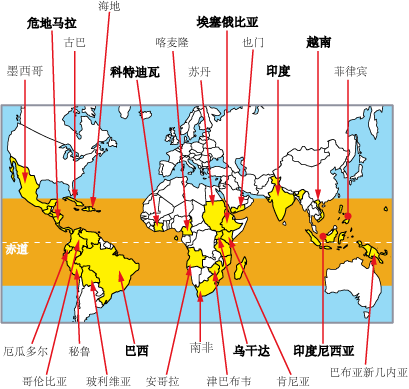
Coffee Common sense Coffee grading system summarizes the selection of classification methods in various countries to determine the altitude of coffee origin
First of all, we should know clearly that the factors that ultimately determine the flavor of coffee come from the environment of its producing area, the way of treatment and the quality of raw beans. I believe that without better raw beans, no matter how good the roaster will not bake amazing coffee. Of course, when good coffee beans are in the hands of baristas, baristas should fully understand their characteristics and then add icing on the cake.

Ethiopian Hambera Coffee 5.0 Sidama Coffee Flavor Taste Characteristics Introduction
Professional coffee knowledge exchange More coffee bean information Please pay attention to coffee workshop (Weixin Official Accounts cafe_style) Several important Ethiopian coffee producing areas, such as Yejiashev and Sidamo, have received considerable attention in recent years. Guji is also a part of Oromia Asia, southwest Ethiopia, south of Addis Ababa, the capital.
The effect of altitude on the Flavor and quality of Coffee beans
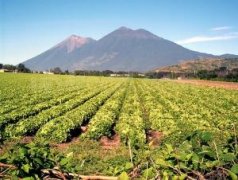
Coffee beans are generally graded according to their size, defect rate and altitude. The size and defect rate of raw beans are easy to understand, but many people don't quite understand. Why do some producing areas use the altitude of coffee beans as the basis for classification, and many coffee sellers also sell their coffee at high prices because of their high altitude coffee? why? First of all, we should realize that the geographical location of coffee beans
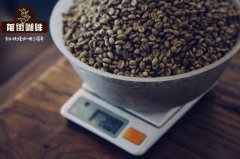
The ranking system of raw beans in coffee producing countries introduces what is the best grade of coffee beans.
Ethiopia (rated in proportion to defective beans) before the emergence of the Ethiopian Commodity Exchange (Ethiopia Commodity Exchange referred to as ECX), Ethiopia's coffee export grade was established by the CLU Department (Cupping and Liquoring Unit) under the Ministry of Agriculture, mainly according to the number of defective beans in 300g. The classification criteria are as follows.

Honduran Coffee grading system grading Standards for Honduran Coffee
Professional coffee knowledge exchange more coffee bean information please pay attention to the coffee workshop (Wechat official account cafe_style) Honduras coffee classification in Honduras, using the elevation and defect rate classification system, in which the defect rate classification is divided into the United States and Europe two standards, without much explanation here, but the elevation classification is as follows: Strictly High Grown (SHG):

The effect of altitude on Coffee Why coffee beans growing at high altitude are better?
Professional coffee knowledge exchange more coffee bean information Please pay attention to the coffee workshop (Wechat official account cafe_style) Coffee raw beans are generally graded according to raw bean size, defect rate and altitude. The size and defect rate of raw beans are easy to understand. But why do some producing areas use the altitude of coffee beans as the basis for grading? many coffee sellers also boast that their coffee is at a high altitude.

What is the relationship between the altitude of coffee growth and the flavor of coffee?
Professional coffee knowledge exchange more information about coffee beans Please follow the coffee workshop (Wechat official account cafe_style) what is the relationship between the altitude of coffee growth and the flavor of coffee? Coffee beans are generally graded according to their size, defect rate and altitude. The size and defect rate of raw beans are easy to understand, but many people don't quite understand. Why do some producing areas grow with coffee beans?
Yunnan fine coffee bean grading system taste flavor description Yunnan small coffee brand ranking
Professional coffee knowledge exchange More coffee bean information Please pay attention to coffee workshop (Weixin Official Accounts cafe_style) Although Yunnan has been planting coffee for many years, it is still not mature enough overall. The classification system is also relatively messy. 1) International common classification standard: according to the size of coffee beans, round holes are used

Why the higher the altitude, the better the coffee?
Professional coffee knowledge exchange more coffee bean information Please pay attention to the coffee workshop (Wechat official account cafe_style) Coffee raw beans are generally graded according to raw bean size, defect rate and altitude. The size and defect rate of raw beans are easy to understand, but many people don't quite understand. Why do some producing areas use the altitude of coffee beans as the basis for grading? many coffee sellers also boast of their own.

Colombian coffee raw bean grading method
One: according to the defect rate, the number of defective beans allowed per 500 gr sample:-Private raw bean exporter: 72 defects-National Coffee Council: 42 defects defective beans are divided into two types:-first: known as first-level defects-second: called second-level defects first: main defects (defects that affect coffee taste characteristics): black beans, moldy beans.
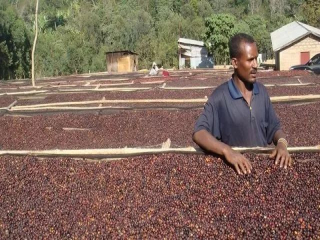
Ethiopian coffee bean grade introduction, why Ethiopian coffee beans are of different sizes?
Why do people usually buy Ethiopian coffee beans of different sizes? Even if it is the highest G1 coffee bean. Today I would like to explain to you why Ethiopian coffee beans are of different sizes. This involves Ethiopian coffee beans, and his grading has nothing to do with the size of coffee beans.